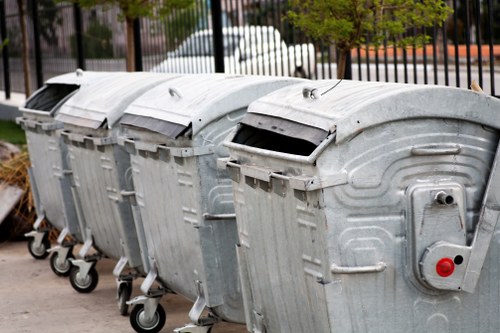
House Clearance Millbank — Recycling and Sustainability
Welcome to our sustainability statement for House Clearance Millbank and Millbank house clearance services. We focus on eco-friendly waste disposal area practices and creating a sustainable rubbish area for households and small businesses. Our goal is to combine practical clearance work with measurable environmental outcomes so that every clearance in Millbank contributes to a greener borough.We set a clear recycling percentage target for our operations: a minimum 75% reuse and recycling rate by 2028. That target covers materials recovered for direct reuse, donation to community partners, and material recycling streams. Achieving this means prioritising repair, redistribution and separation of waste at source to avoid landfill and lower the carbon footprint of each Millbank clearance.
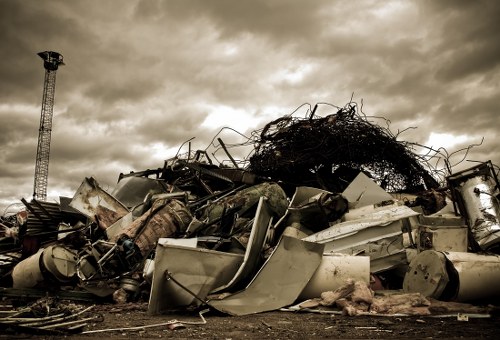 Our approach sits alongside the City of Westminster and neighbouring boroughs' waste separation policies: we align with local strategies that promote separate collections for glass, paper, cans and food waste and support textile and WEEE (electrical) take-back where available. As a Millbank house clearance provider we adapt to borough-level rules while going further with internal sorting to maximise salvageable goods and recyclable fractions.
We operate using a clear hierarchy: prevent > reuse > recycle > recover > dispose. Our teams are trained in on-site sorting so bulky items are separated into recyclable wood, metal, mixed recyclables, and specialist streams like hazardous small-quantity waste. House clearance in Millbank often uncovers furniture, appliances and textiles suitable for reuse; we divert these through dedicated channels rather than consigning them to landfill.
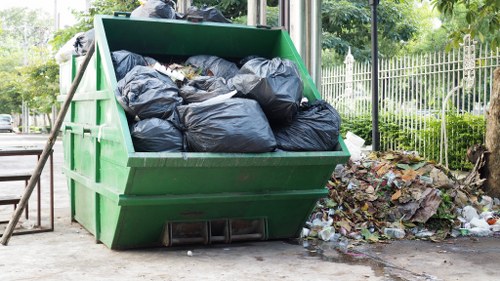
Local transfer stations and licensed hubs
We work closely with licensed local transfer stations and municipal hubs that serve Westminster and the surrounding London boroughs. These transfer stations act as intermediary sorting and processing points where materials are consolidated and transferred to recycling facilities or reuse centres. Using authorised transfer stations reduces double handling, improves recovery rates and ensures compliance with waste carriage regulations.Examples of recycling activity relevant to the area include organised bulky waste streams for furniture, WEEE drop-offs for small appliances, separate glass and cardboard recycling routes, and food/compost collections in areas where borough services exist. Our Millbank clearance teams respect these streams and label consignments clearly to match municipal sorting requirements.
Partnerships with charities and reuse organisations
We maintain strong partnerships with local charities, community reuse networks and social enterprises that accept gently used items. Rather than describe specific organisations, we work with furniture banks, hospice charities, and community centres that provide direct social benefit in London. By redirecting usable goods to these partners we extend the life of household items and support local households in need.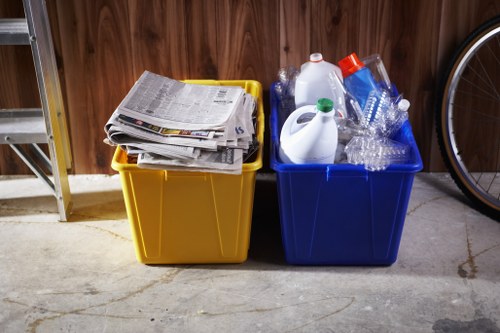 When an item is suitable for reuse, our Millbank clearance crews document and collect it separately. We coordinate collections and drop-offs with charity partners and community reuse schemes, creating a reliable flow from house clearance to second-hand use. This not only helps communities but raises our overall reuse and recycling percentage for each clearance job.
 Sustainable transport is central to lowering the carbon footprint of our rubbish removal. We have invested in low-carbon vans, including electric and plug-in hybrid vehicles for urban runs, and Euro-6 compliant diesel where longer distances are unavoidable. Route optimisation software and consolidated collections reduce mileage and emissions, and for short, dense street runs we sometimes use cargo bikes and small electric vans to keep neighbourhood air cleaner.
Operationally, every Millbank house clearance follows documented waste transfer notes and manifests so materials destined for recycling or charity donation are traceable. We encourage householders to indicate items for reuse before collections to speed sorting and reduce contamination in recycling streams. Our crews receive recycling and hazardous-waste handling training, ensuring safe separation of items like batteries, solvents and asbestos-suspect materials that require special management.
To support long-term sustainability we measure and review performance regularly: percentage of material reused, recycled, recovered and sent to landfill per quarter, and the CO2 savings associated with reuse and low-carbon transport. These metrics feed into continuous improvement plans, and publicly reported targets help keep operations accountable to residents of Millbank and adjacent boroughs.
In summary, House Clearance Millbank combines compliant waste handling with an active reuse-first mindset. By targeting a 75% recycling and reuse rate, strengthening links with local transfer stations and charities, and running a low-carbon fleet, our Millbank clearance team aims to deliver a cleaner, more sustainable rubbish area for the community while respecting borough approaches to waste separation and resource recovery.